The Art Tycoon, The Textile Company, and His Nephew on Trial in Colombia
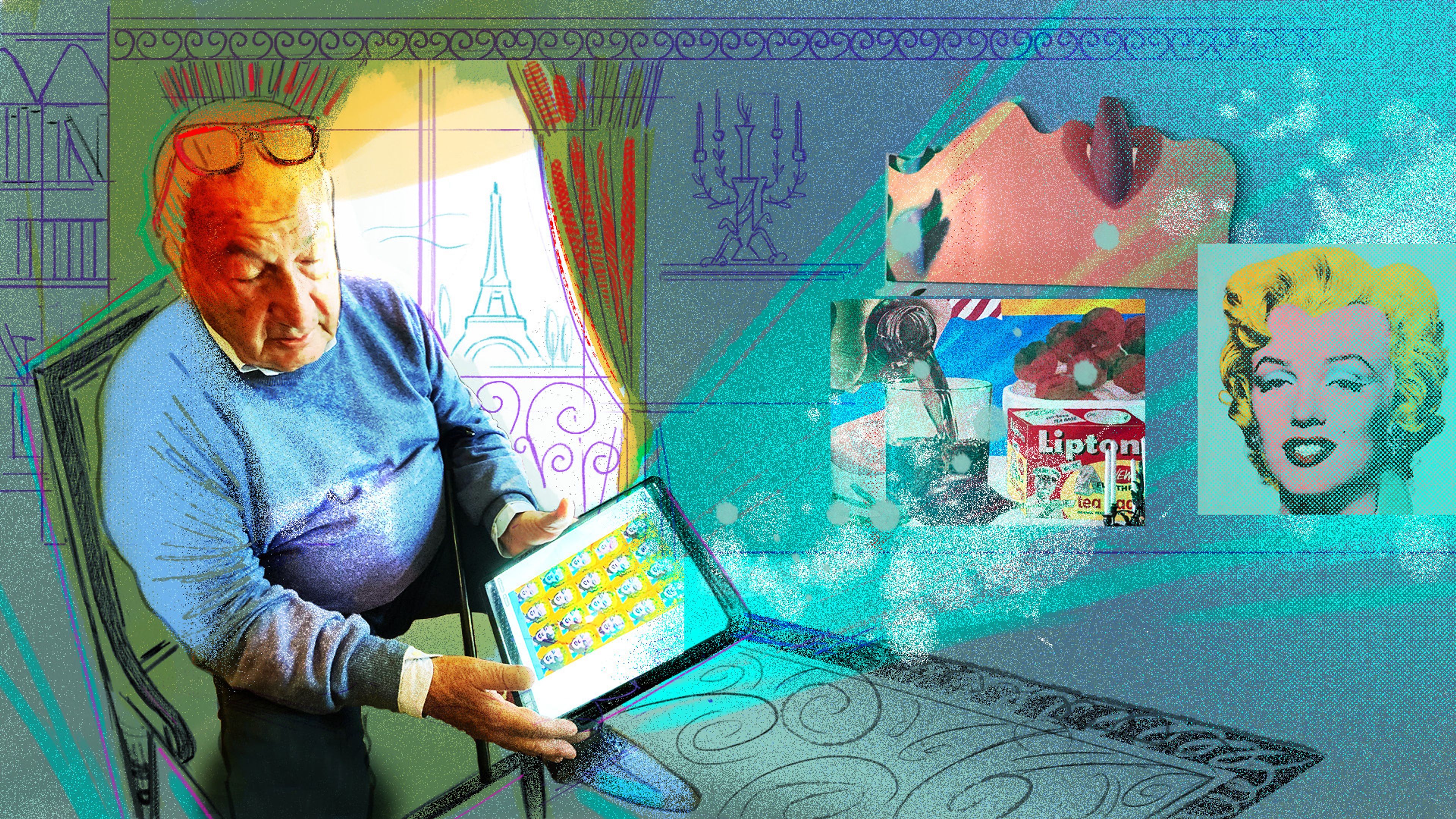
When word reached billionaire art collector José Mugrabi that reporters had been making discreet inquiries in the art world about the source of his wealth, he became intrigued.
“I thought, carambas, why are they not calling me? This is something curious.”
So he picked up the phone, and invited the journalists from Finance Uncovered and Centro Latinoamericano de Investigación Periodística (CLIP) to his Paris apartment in the exclusive 7th arrondissement for a rare interview. It would prove to be the first of several remarkably frank conversations.
Dressed casually in dark jeans, brown leather oxfords, and a navy sweater over a crisp powder-blue shirt, the then-84-year old wryly appraised his guests from a throne-like seat in a yellow silk-lined Napoleon III armchair in his opulent living room. Around him, nineteenth-century gold-trimmed furniture, antique carpets, and a carved marble fireplace filled the lavish space.
The decor—fit for a French nobleman—was no accident. “I hired Jaques Garcia,” he said, naming the designer best known for refreshing parts of the Palace of Versailles and the Louvre.
The surroundings cut a sharp contrast to the man himself: for Mugrabi is a King of Pop Art, a self-made textile tycoon who made millions building a business empire in Colombia before he moved to New York in the 1980s, claiming Bogotá had become too violent. Over several decades since then he has multiplied his fortune by dominating the market for Andy Warhols. He reputedly owns more than any except the Warhol museum itself.
His bids have set trends and dictated prices at auction houses globally. His family’s fortune—reportedly $5 billion —is anchored by a collection of nearly 600 Warhol paintings, alongside major works by iconic artists such as Jean-Michel Basquiat, Damian Hirst and Jeff Koons.
“I’ve had such incredible success,” he told reporters, adding with pride that he is now funding a museum dedicated to Albert Einstein in Jerusalem—something he views as an important part of his legacy.
However, Mugrabi's story, and that of the fortune behind his vast art collection, still has chapters to tell.
After almost a decade of legal wrangling and appeals, a judge in Bogotá will finally decide the start date of the trial against his nephew and former business protégé, Alberto Aroch Mugrabi. Sources say the trial is due to start this month.
Aroch is accused of running a vast laundering network that prosecutors say moved hundreds of billions of pesos through fictitious exports, irregular loans, and circular transactions. The indictment describes this enterprise as a “permanent organization … created for criminal purposes” and places Moda Sofisticada, a Colombian textile exporter, at its center. The case is considered one of the largest money-laundering prosecutions the country has ever seen. Aroch denies all charges.
While it was Aroch who built and ran Moda Sofisticada, until now there have never been any news reports of business links between the company and his famous uncle.
But now an investigation by FU and CLIP has confirmed that the billionaire art collector helped establish Moda Sofisticada with the wealth he had made during his decades in Colombia, and that, by his own account, retained a financial interest in it up until his nephew’s arrest—though he strongly insisted he “never earned a cent” from the company.
The wide-ranging investigation has drawn on court documents, rare exclusive interviews with Mugrabi himself and leaked documents from the bank that managed his family trust.
Reporters reviewed a February 2016 testimony by Alberto Aroch given in Bogotá two months after his arrest in criminal proceedings in which he was only a witness and unrelated to the current case against him. In it, he described José Mugrabi as a “partner” in Moda Sofisticada. FU and CLIP have also seen a sealed 2014 New York deposition, likewise from an unrelated civil case, in which Mugrabi said he held a stake in Moda Sofisticada and that it was his “living” outside of art.
The investigation also examined leaked internal banking documents from the Cayman Islands dated 2006 in which a compliance expert raised urgent concerns about the trust that held most of Mugrabi’s art collection—then valued conservatively over $300 million. The expert noted issues with missing documentation for the original source of funds and subsequent asset injections.
While it is not known what happened as a result of these concerns, all these findings taken together raised questions over the origins of some of the funds that may have been used to help amass Mugrabi’s vast collection of contemporary art.
In a series of interviews with FU and Clip, Mugrabi admitted historic links to Moda Sofisticada, but said he had never earned anything from it and that no art had been bought with its funds. He has said he had no knowledge whatsoever of any alleged wrongdoing at the company.
On the trust, he said he did not know of any concerns being raised. It is unclear what action, if any, trust manager Cayman National Bank felt it was appropriate to take in response to their compliance expert’s memo, as it did not respond to reporters’ questions.
During the course of the investigation, reporters also spoke to compliance experts and former law enforcement officials who all painted a picture of the risks inherent in the headline-grabbing art market more generally. It has long been considered less regulated than other high-value markets, and therefore vulnerable to being exploited. The market’s sky-high price tags, subjective valuations, the normalization of multimillion-dollar private deals, anonymity, and cross-border nature of the transactions all make it ripe for exploitation.
Mugrabi himself did not comment directly on these risks, and reporters found no evidence that he personally engaged in such exploitation; he said he had not once been asked any enhanced due diligence questions by any galleries or auction houses.
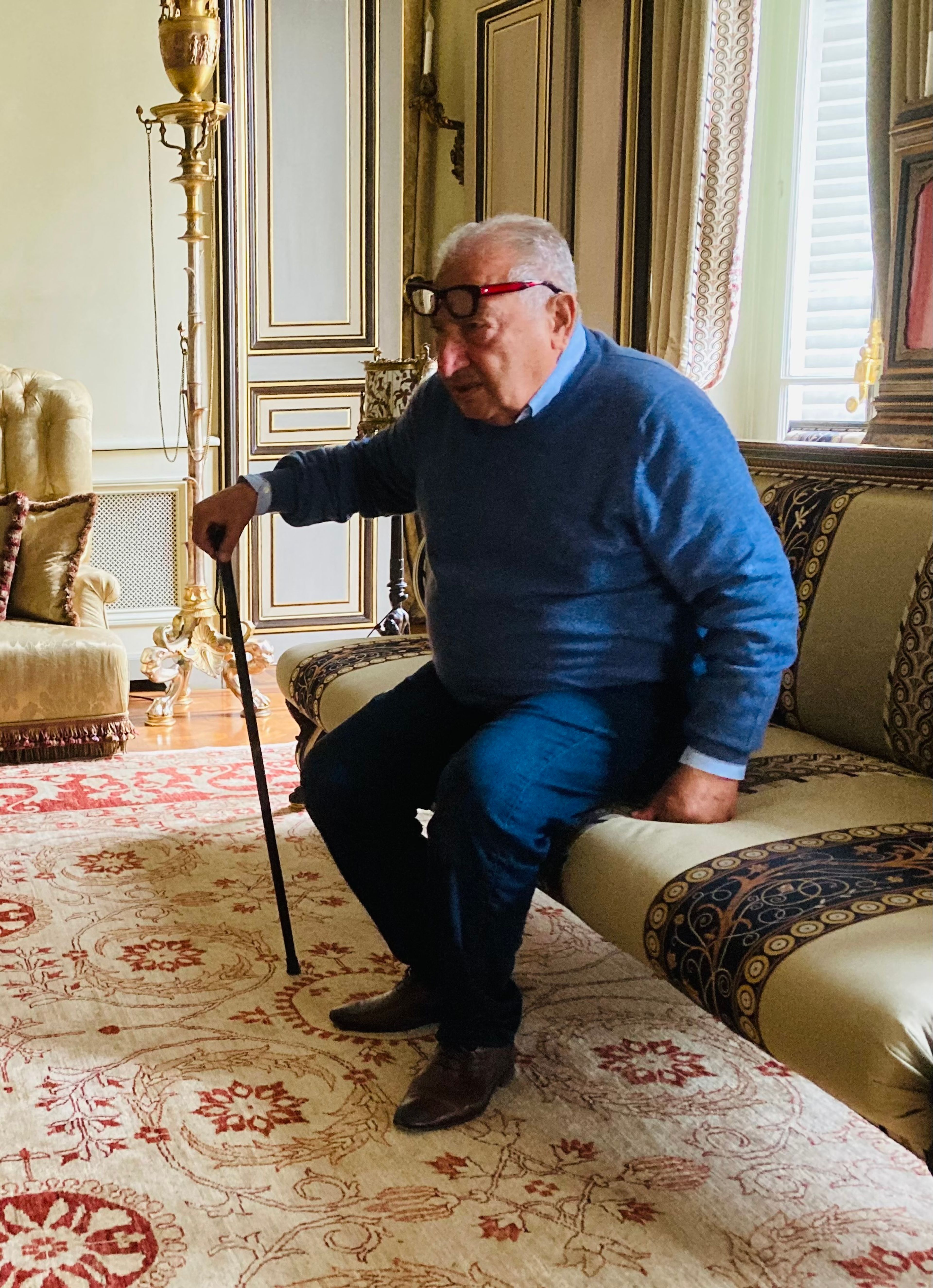
Jose Mugrabi in his Paris apartment, black cane in hand (Photo: Malia Politzer)
The Rise of a Pop Art King
Reporters first met Mugrabi in his Paris apartment in early June 2024. The collector was a gracious host, offering coffee and cookies and at one point he called in a personal attendant to show off his latest art acquisitions on a cracked iPad. He leaned forward in his seat and rested one hand on a black cane that he would sometimes draw across his chest like a shield when questions grew uncomfortable. Even then, he urged the reporters on: “Ask, ask!” he said. “I will answer anything you want to know.”
He then spent the next two hours reminiscing in Spanish—the language he feels most comfortable in—tracing his path from the son of Israeli grocers to the upper reaches of the global art market.
Mugrabi was born in Jerusalem in 1939, one of seven children in a Syrian-Jewish family who ran a grocery store in the working-class district of Mahane Yehuda market . At sixteen, restless and ambitious, he dropped out of school and bought a ticket to Bogotá where he apprenticed with his uncle, a textile merchant. He remembers arriving in Colombia speaking not a word of Spanish, and working as an errand boy in his uncle’s warehouse. “Bring this up, bring that down, bring the Coca-Cola, ” he says of his earliest tasks, amused by the distance between that boy and the man he became.
According to his own telling, he became fluent within months , then left to join a competitor after failing to negotiate a raise . Within two years, he says, he was a highly paid salesman—earning the equivalent of more than $12,000 per month today. From there he built what he describes as one of Colombia’s major textile exporters. “I am insistent and honest,” he says. “I took care of my customers, and that did me a lot of good.”
By the early 1970s, Mugrabi had brought a young protogé into his business. His nephew, Alberto Aroch Mugrabi, born in Bogotá in 1962 but raised in Israel, returned to Colombia around the age of 10, and was taken under his uncle’s wing. "He was like a son to me ," Mugrabi recalled from his Parisian apartment. He joined Mugrabi’s business as an apprentice, shadowing his uncle to learn the trade.
As Mugrabi’s business and profile skyrocketed, he said more established players began to feel threatened. “My success was so great that even very large industries in Colombia were complaining about me. They said all sorts of things, about contraband and so on—I heard it so many times,” he told reporters, unprompted, during the Paris interview.
When reporters asked him more about the contraband rumors in subsequent conversations, he responded with an element of frustration. “Really, that contraband thing—I heard that a lot,” he said. “That I’m a contrabandista, and all that. But I’ve never had any problem with the government or anything.” He told reporters that Belisario Bentacur, Colombia’s president from 1982–1986, even called him personally to discuss the issue. “He called me to tell me, ‘What’s going on with the textiles, with what they’re saying?’” Mugrabi said. “I told him, ‘Well, they’re talking…You send Customs [representatives] here every day—what have they seen?’”
Mugrabi dismissed the rumors as jealousy from competitors—in particular, two companies that were dominant in Colombia , and which he said felt threatened by his success importing merchandise. At one point, he said, he almost bought one of those companies. “More success is impossible,” he added. “Success has enemies.”
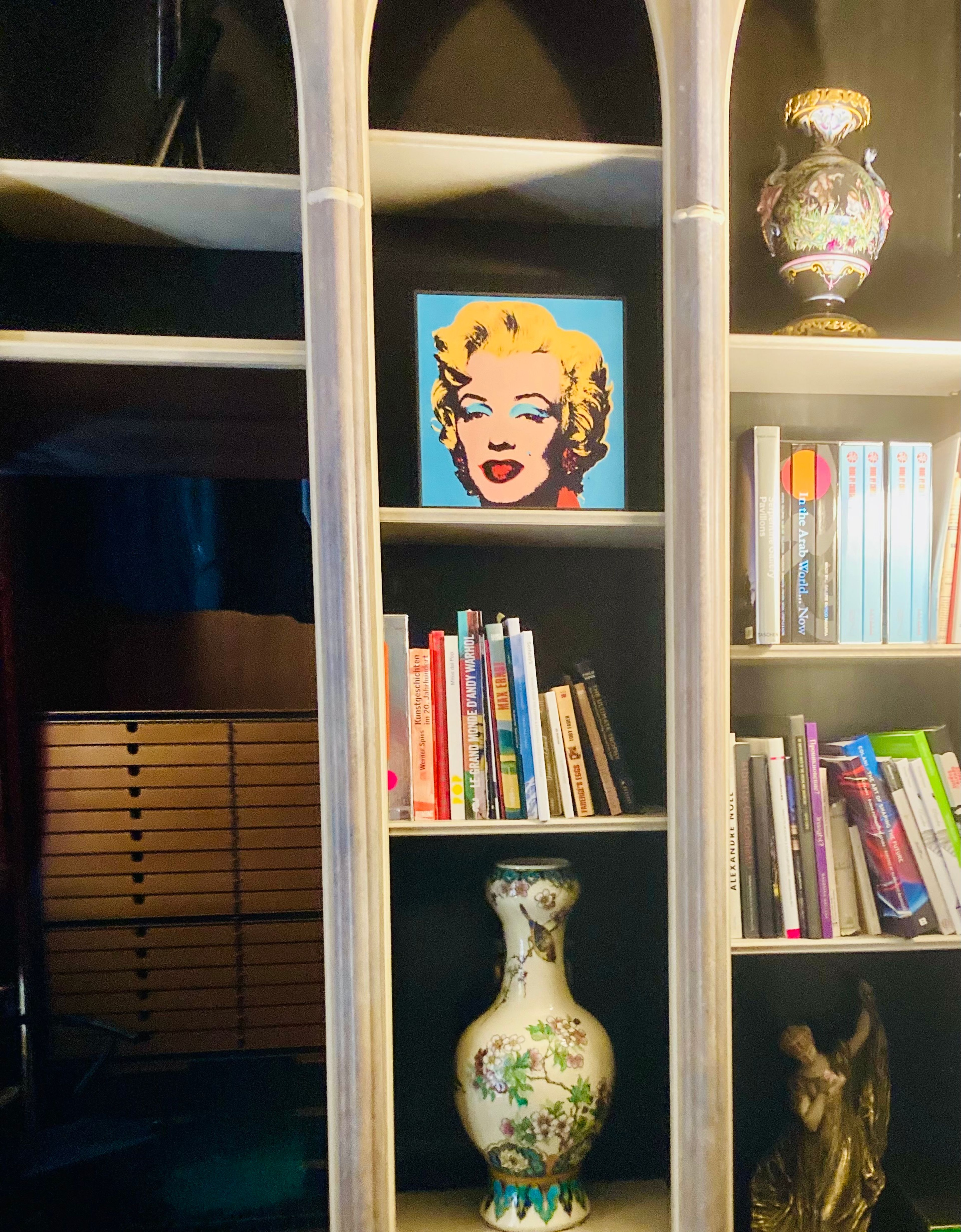
An iconic Marylyn Monroe, Paris apartment (Photo: Malia Politzer)
"Wow, Mr José"
Towards the end of that decade, Mugrabi told reporters, violence in Bogotá had worsened. He said he moved his wife and young sons to Miami for safety, seeing them only on weekends until his wife delivered an ultimatum: they needed to live together as a family.
In 1982, Mugrabi, his wife and their two sons settled into a luxury apartment in Manhattan’s Trump Tower, which they still own. Before leaving Colombia, he told reporters that he was already a millionaire and liquidated his textile assets—selling off warehouses and inventory—and placed the proceeds in a Cayman Islands trust, which he describes as the financial foundation of his art-buying career.
This new chapter began the year before, with a call from a Citibank manager named Jeffrey Deitch, now a major art dealer (who did not respond to reporters request for comment). "He called me every day," he recounted from his golden chair. Eventually, Mugrabi gave in. "I told him, 'Look, buy me any painting you want for $100,000, but don't fuck with me anymore.' "
His first acquisition was a Renoir. Soon after he bought a painting for $120,000 on a whim, by an artist whose name he said he could barely pronounce: Mark Rothko. "I liked it, bid and bought it... with no one to help me, to advise me, nothing." Then, “guided by instinct,” he successfully bid on three other paintings that he liked. He was able to sell them shortly thereafter at auction for double—or triple—their purchase price. He thought, "Wow, Mr. José, this is your business.”
From there, he moved aggressively. In the 1980s he began buying contemporary art at an unprecedented rate, eventually assembling one of the world’s largest Warhol holdings—reputedly more than 800 works at its height. The prices he paid for acquisitions also grew, until by the 2010s he was making headlines and setting records: In 2012, the New York Times highlighted his $37 million purchase of Warhol’s Double Elvis ; in 2013, he paid $58.4 million for Koons’s Balloon Dog (Orange), then a record for a living artist . While these years represented the public peak of his buying, Mugrabi continues to actively trade in art in the present day.
His competitive bidding practices have driven up market prices, and is watched closely by other dealers. Mugrabi is a “very successful trader,” said Don Thompson, an economist and former business professor at the University of Toronto, Harvard and the London School of Economics, who wrote several books about the international art market. In the past, he has helped to “make the Warhol market in the same way that market-makers exist in the stock market.”
One of Colombia’s Biggest Money Laundering Cases
That much of the story is public. Less known is what happened to the family’s textile enterprise after his departure from Colombia in the early 1980s, and Mugrabi’s business connections to his nephew—once the heir apparent—whose own story would lead to courtrooms and an indictment.
According to Colombian corporate filings, Moda Sofisticada S.A.—which would later become Moda Sofisticada Ltda—was incorporated in 1991. Publicly, Mugrabi has never been connected to the company. But in interviews with reporters, Mugrabi said he helped to set it up in the early 1990s as a favour to his nephew and a cousin, before turning entirely to the art world. He insists he had no operational role and never earned income from it.
Today that same company is at the centre of a major money laundering investigation. In December 2015, Colombian authorities arrested Aroch on charges of money-laundering, illicit enrichment and criminal conspiracy, freezing his assets, including Moda Sofisticada. In the 2016 indictment, prosecutors accused Aroch of being the architect of a vast money laundering scheme that channeled hundreds of billions of Colombian pesos through textile companies by falsifying exports and invoices, using shell companies, and large cash deposits structured in smaller amounts just under banks’ reporting thresholds. They said he ultimately routed some of these funds into real estate via fiduciary trusts.
“The textile industry is one of the highest recorded industries being involved in money laundering,” said David Tyrell, a former DEA agent who now investigates complex financial crime. “Because you’re exporting bulk quantities—and you can attribute any market price that you deem appropriate—it is quite simple to falsify and over inflate invoices to capture and account for illicit money movement.”
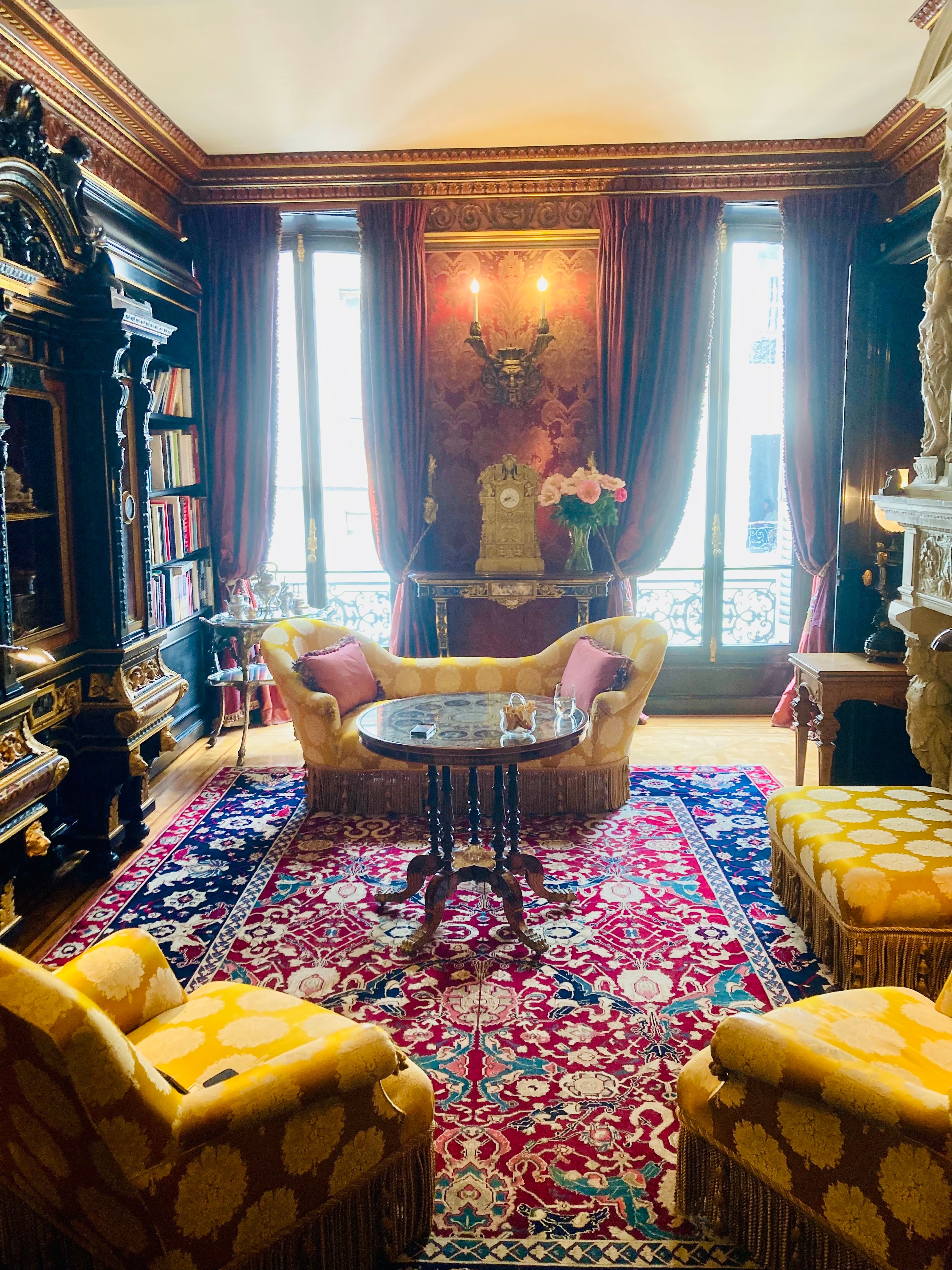
Mugrabi's opulent living room, designed by Jacques Garcia (Photo: Malia Politzer)
Trial Imminent
Prosecutors believe that Aroch’s textile business began in the 1990s and allege that money laundering activities began with Moda Sofisticada. Their evidence spans 2001 until 2014, the year before Aroch’s arrest. Over that period, they catalogued numerous transactions that they claim had no apparent commercial justification—for example, booking revenue for future exports that never materialised.
In the indictment, prosecutors note that the Colombian tax and customs authorities opened 27 investigations into Moda Sofisticada over 13 years. In one case, inspectors cited a shipment for labeling violations, finding that it contained unsellable “perforated, stained and foul-smelling garments”. According to prosecutors, several shipments were seized and deemed contraband. They wrote that two of Moda Sofisticada’s biggest alleged “suppliers” had no staff, warehouses, or inventory, yet allegedly received tens of millions of dollars—most of which ultimately ended up routed back to Aroch’s accounts.
Investigators also flagged financial links between Aroch-controlled firms and companies associated with Henry and Isaac Guberek, a father-and-son textile duo later sanctioned by the US Treasury in 2013 for allegedly laundering hundreds of millions of dollars for narcotraffickers and other organised crime groups. Prosecutors cite transfers from Guberek-associated companies—several of which would later come under US sanctions—to entities linked to Aroch, including Moda Sofisticada, and note that one company that he would later manage had been founded by a member of the Guberek family.
Prosecutors clarified to reporters that they did not find evidence of funds originating from drug trafficking in their own investigation into Aroch and his companies.
Two Moda Sofisticada executives arrested alongside Aroch—Ricardo Munar Fernandez and Fernando Rivera Cifuentes—have pleaded guilty to illegal enrichment in 2019 and were convicted. Aroch initially pled guilty to the lesser charge of illegal enrichment in December 2015, later withdrew that plea, and now denies all wrongdoing.
After 19 preparatory audiences and several appeals, his trial is expected to start this December, a full decade after his arrest. Aroch’s lawyer, Teresita Barrera, said her client would not comment on the case before the trial began, adding: “People are innocent until a final court judgment says otherwise.”
Mugrabi said his nephew had told him the allegations were not true and that he believed him.
As Aroch’s legal troubles intensified, Mugrabi—once like a father to him—says he began to distance himself from his nephew. “I didn’t want to get involved in it,” he said. “So we broke up, and he never spoke to me again.”
A Family Business?
Until now, no news reports have connected the famous art dealer to his nephew’s companies. Yet company filings, multiple interviews with Mugrabi himself and two sworn testimonies reviewed by Finance Uncovered and CLIP raise questions over the extent of his financial interest in Moda Sofisticada up until his nephew’s arrest.
In a sealed New York deposition seen by reporters, taken in an unrelated civil art dispute in 2014 —the year before Aroch’s arrest—lawyers asked Mugrabi about his background.
Asked about his main occupation in Colombia before leaving for New York in 1982, Mugrabi replied: “Textiles,” identifying his textile company as “Moda Sofisticada.” Asked whether he still had a role in that company “now” he said: “Yes…I have a percentage, I have shares.” When asked about what he did for a living outside of art in the present day, he answered construction and real estate, noting that both were a part of Moda Sofisticada On revenues, he said he did not know the figures: “It is managed by my nephew. But it goes well. I know it goes well.”
In a separate sworn statement given in Bogotá in February 2016—two months after his arrest and in proceedings unrelated to his own case—Aroch named the founding partners of Moda Sofisticada as “José Mugrabi Mugrabi, José Mugrabi Tesone, and me,” respectively referring to his cousin and art-collecting uncle. He described the company as a family textile venture that had taken over the business of another family company, Verdi S.A., which had been liquidated to “reduce expenses.” His uncle, José Mugrabi Tesone, he added, was Verdi’s primary shareholder. (When put to José Mugrabi, he said that he “remembered the name” of Verdi SA but didn’t recall his exact connection to it.)
Reporters cross-checked these accounts against formal corporate filings for Moda Sofisticada Ltda and Verdi S.A. in the Colombian corporate registry.
Corporate records for Moda Sofisticada do not list José Mugrabi as a partner or shareholder. His name appears only once as a guest at a partners’ meeting in 1993. When this was put to him by reporters, he categorically denied attending it: “That [record[ does not exist at all—one-hundred percent, that is not true.”
This suggests that any stake he held in the business could have been informal or indirect—something broadly consistent with parts of his own account. Over several conversations with reporters, Mugrabi offered differing explanations. “I was a partner…but I did not participate in the business,” he said in Paris, adding “I used to have 80 percent and little by little I gave up and I kept 20 percent. I was not in any paperwork.” In subsequent interviews he revised that statement: “I didn’t have any shares, none whatsoever…I lent them money.”
When pressed about the loan, he suggested at one point that it was cash, and another that it was merchandise worth $2 million that he left in Colombia “I don't consider it capital, I consider it a loan that was equivalent to more or less 20 percent of their company.” He insisted he never received a “penny” back from it.
The lack of clarity around any formal stake in Moda Sofisticada is in contrast to records for Verdi S.A. for which reporters were able to establish a connection between a family textile business and Mugrabi’s art activity.
The 1994 incorporation documents for Verdi show that its main shareholder, with 85 percent of the stock, was J Mad Investments Ltd, a company registered in 1982 in the Cayman Islands. Separate documents reviewed by reporters indicated that it had an account at a large auction house. In Paris, Mugrabi told reporters that J Mad was his company, and that it did buy art but no longer existed.
While Verdi forms no part of the indictment in Colombia and there is no accusation against the company, it was very closely related to Moda Sofisticada: by 1999, it was being run by Aroch (and the two other executives who pled guilty to illicit enrichment in the Moda Sofisticada case) ; and in or around 2003 it was liquidated .
According to Aroch’s 2016 testimony, it was acquired by Moda as part of a consolidation drive. What happened to J Mad’s shares in Verdi – for example, whether they were bought out, became worthless or were transferred into Moda – is not known.
Mugrabi acknowledged that “it is possible” that J Mad owned Verdi. He said he didn’t remember what happened to Verdi’s shares when it was liquidated.
Taken together, the picture these findings present is incomplete. In typical corporate practice, the roles that Mugrabi described in relation to Moda Sofisticada—particularly holding shares—could be expected to generate returns if the business was as successful as he and his nephew described. However, reporters were unable to determine what financial benefit, if any, he may have ultimately received. Mugrabi has consistently denied that he received any financial benefit from the company.
According to the indictment in Colombia, Moda Sofisticada’s own corporate accounts suggest the company was booming a few years before Aroch was arrested. The prosecutors noted that its net income jumped 1,251 percent between 2011 and 2012 – compared with a 77 percent contraction in Colombia’s textile sector as a whole.
Across these accounts, it seems that “Moda Sofisticada” may have been, for Mugrabi, less a single legal entity than the continuation of a family textile legacy that had evolved over decades. He stressed that his wealth came from the textile and construction ventures he built upon arriving in Colombia. “Moda Sofisticada predates Abi [Aroch’s nickname] and long before he was born. I had that business since the 1960s. So, it's not a new thing.”
By his telling, any active connection to textiles belonged to an earlier chapter of his life. Once he had moved to New York, he said, he dedicated himself wholly to the art business, where he remains “very active” to this day. “I am one of the greatest [dealers] in the art world,” he said.
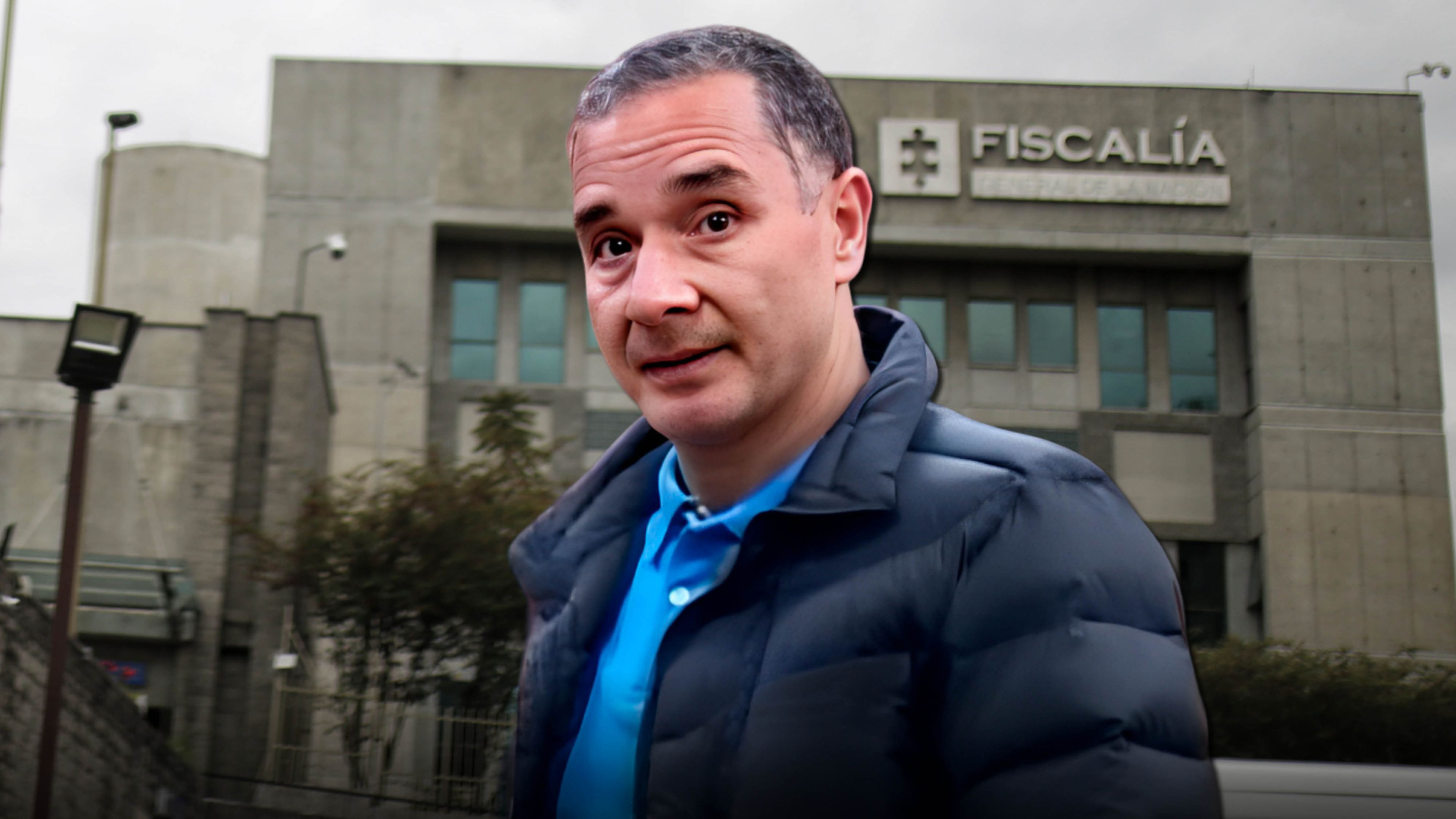
Alberto Aroch Mugrabi (Image: Cambio)
An Offshore Trust
Around the same time that Colombian investigators began looking into Aroch’s companies —though completely separately—the Cayman Islands trust behind Mugrabi’s art buying was drawing questions from its own administrators, according to leaked files.
Internal documents from Cayman National Bank—leaked in 2019 by hacktivist non-profit Distributed Denial of Secrets—show that in early 2006 an in-house compliance expert was raising urgent concerns about Abraham Mugrabi Trust (AMT)—a structure named after Mugrabi’s father. In the memo, the consultant warned that “just about every component of trustee problems is there, both major, minor and in-between, and we’re not talking mickey mouse [sic] amounts.” Of the 90 CNB structures he reviewed over four and a half months, he recommended making AMT their top priority.
Contained within AMT, according to the leaked documents, were a web of other offshore companies registered in various jurisdictions, including Jombihis Corporation , the family’s primary art-buying vehicle, and J Mad Investments, the company that had been Verdi’s majority shareholder . It also held a vast art collection containing Warhols, Basquiat's and furniture, valued in 2002 at roughly $300 million.
Offshore vehicles, including trusts, are legal and widely used by wealthy collectors to hold art and for estate, succession, and tax-planning purposes. (In a 2014 deposition, when asked by lawyers, Mugrabi said he had a Cayman trust for tax reasons, though he did not at that time name AMT.) But because these arrangements can be opaque and often contain multiple entities across borders—regulators classify them as high-risk for money-laundering and require stronger checks and record keeping.
In the case of AMT, anonymity was not the issue: It was well known among art-market actors that Jombihis was Mugrabi’s main buying company. The consultant’s memo, however, found that basic controls were missing. He wrote that the original source of funds had “never been explained,” beyond references to a “successful textile operation in Colombia,” and documentation on how subsequent asset injections were made was also lacking.
There is no record of Moda Sofisticada being owned by AMT.
Cayman National Bank did not respond to reporters’ queries. It is not known what actions, if any, were taken as a result of these concerns and there is no evidence of wrongdoing by the bank or Mugrabi.
When asked to respond to the concerns raised by the consultant’s memo, Mugrabi said that he did not recall ever receiving any communications from CNB raising concerns about source of funds or any other issues, and was surprised that AMT was still operational as late as 2006—he’d thought he’d closed it years earlier.
A Blind Spot in the Art Market
According to Scott Greytak, deputy executive director of Transparency International U.S., if presented with these fragments—a high-value art buyer; an offshore trust; a former protegé working in a high-risk country and industry charged with alleged money laundering—a compliance officer in many regulated sectors would very likely consider them grounds for enhanced due diligence.
One factor on its own is harmless: “You certainly have legitimate people who set up trusts in the Cayman Islands,” he said. But when someone has “multiple offshore companies and accounts,” is “connected to individuals under investigation,” or has funds coming from “industries or regions that are high risk for criminal activities,” those elements can form “a pattern of suspicious activity.” In most regulated industries, he said, that would raise a client’s risk profile, trigger ongoing monitoring to ensure the account is not being used for illicit purposes, and, if concerns deepen, “you flag it as a suspicious transaction” or even turn the client down.
However art market participants have historically been exempt from such requirements, Greytak said. Asked sector-wide whether due-diligence obligations existed in the global art market at the time of Aroch’s arrest, he was blunt: “Absolutely not.” Without clear rules or “legal requirement to do [due diligence checks], folks don’t do it. And it’s this gray zone—this plausible deniability—that creates problems.”
Whether any such voluntary checks were triggered in the art market is unknown. Reporters found no public record of enquiries made by investigating authorities, dealers or auction houses following Aroch’s arrest in 2015 or after subsequent legal developments—though if they indeed existed, it is very likely they would have been private and out of the public domain. Mugrabi has said that he has never been asked for "enhanced due diligence" by any gallery, auction house or art dealer—even after his nephew’s arrest—and that he has never been contacted by any investigating authorities.
Indeed, it is unclear whether the arrest would have raised flags at all: news of the case was largely confined to Spanish-language outlets in Colombia, and rules vary by jurisdiction on whether a nephew qualifies as a “close associate” under standard risk frameworks. Even if enhanced checks had been carried out, there was nothing apart from the 1993 partners’ meeting for Moda Sofisticada and his nephew’s 2016 testimony connecting Mugrabi to Aroch’s investigated companies in the public domain.
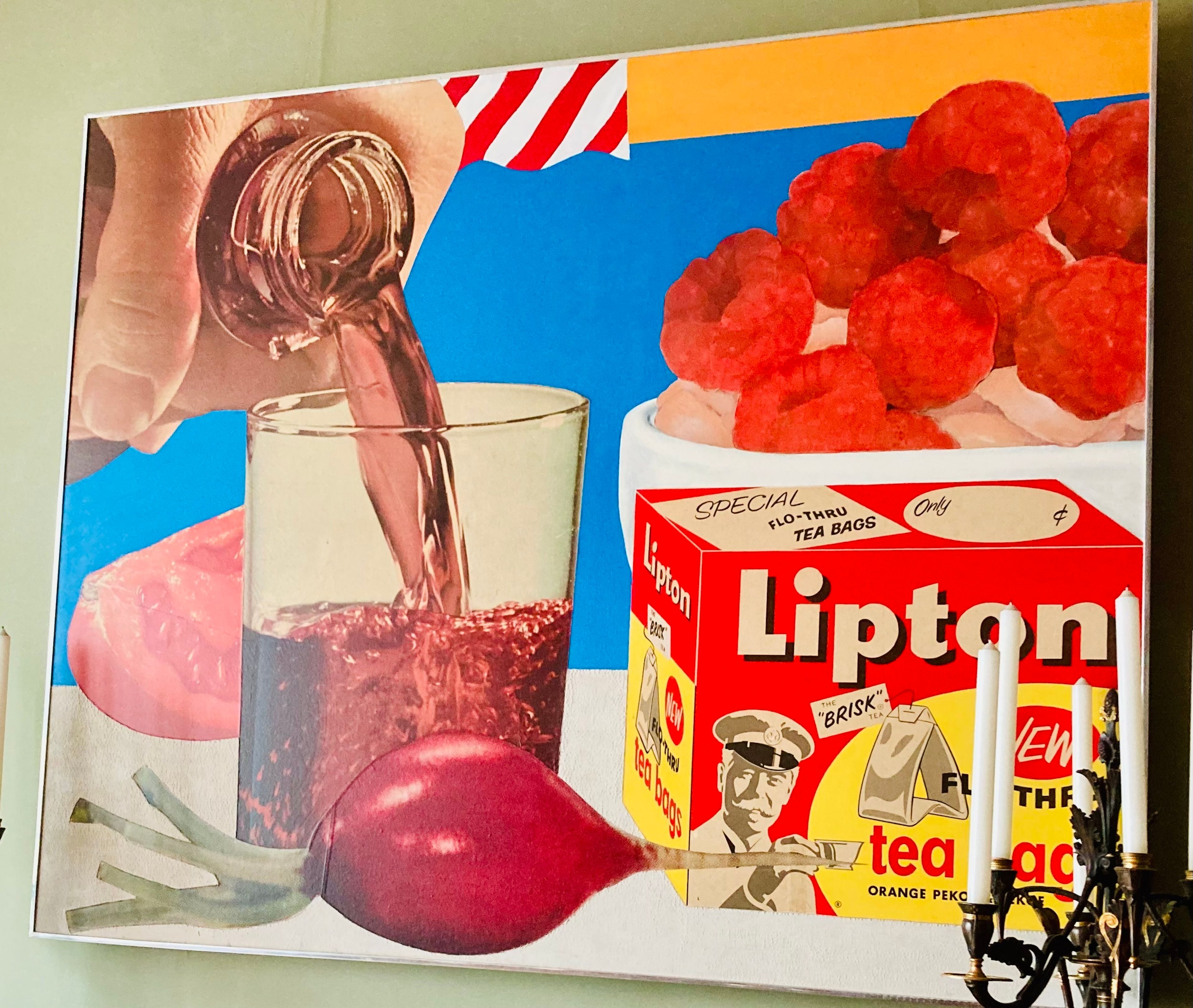
Mugrabi's Tom Wesselmann collage (Photo: Malia Politzer)
Due Diligence
Regardless of what happened in this specific case, the documents highlight a broader issue that has long troubled experts: when large sums enter the top tier of the art market, the origin of funds is rarely scrutinised to the same degree as in other high-value sectors.
In 2020, a U.S. Senate inquiry called high-end art “the largest legal, unregulated market in the United States,” including findings that “secrecy is pervasive” and noting that there is “no legal requirement for the selling party to confirm the identity of the buyer.” Particularly at the high-end, many of the market’s most appealing qualities drawing wealthy clientele—confidentiality, portable value, intermediaries, offshore structures, cross-border mobility—overlap with recognised laundering risks.
Globally, banks, real estate brokers, and casinos are generally required to run anti-money laundering programs which include verifying beneficial ownership, assessing risk exposure, and documenting source of funds, and—where appropriate—source of wealth. But for much of the art world, these obligations did not exist historically, and remain uneven today.
The UK and EU brought art dealers and auction houses into anti-money-laundering regulations in 2020. In the U.S., however, sector-wide reforms remain lagging—although lawmakers in July this year introduced a bipartisan bill called the Art Market Integrity Act, which, if enacted, would bring American rules for art-market participants closer to those in Europe.
Not all market participants support tighter rules. “There are many art market participants who are saying that they don’t need regulations and the art market can regulate itself,” said Irina Tarsis, an art and cultural-property attorney and founder of the Center for Art Law.
In her view, though, “These regulations are more than helpful to safeguard the art market from illicit transactions. I think they are necessary to require due diligence and put art market participants on notice that they can’t just happily take funds regardless of their source.”
Legacy of a Billionaire
Back in his palatial Paris apartment, upon finishing the interview, Mugrabi takes reporters on a tour. The walls are eclectically curated—a Renaissance painting in the living room, a pop-art Lipton ice tea collage by artist Tom Wesselman in the dining room, near a stained glass window bearing Mugrabi’s signature, and a small Warhol painting of a smiling Marilyn Monroe on his bedroom shelf—a testament to a lifetime of collecting. Showing off these acquisitions, including some of his favorites of early Warhol illustrations for children’s books, he repeats a line he’s used before: “I bought a part of American culture.”
Some 5,000 miles away in Bogotá, judges are expected this month to begin hearing evidence about the business empire that prosecutors say his nephew built out of textiles and shell companies. Alberto Aroch, who once trailed his uncle through warehouses, will take his place at the defence bench.
José Mugrabi’s name appears nowhere in the indictment, and he is not nor ever has been charged with any wrongdoing.
Mugrabi told reporters that he has paid little attention to the case.
Instead, he is focused on the legacy he wants to leave behind: The Albert Einstein museum in Israel, his place of birth, is now under construction. The University of Jerusalem had asked his help to build it and he is funding it entirely. “[It is]costing me $30 million, and I’m doing it with complete and utter happiness,” he said. To be associated with Albert Einstein “because I didn't even go to school, practically,” fills him with enormous pride: “After my family, [it] is the most important thing I’ve ever done in my life.”
Regardless of what judges in Bogotá will decide on his nephew’s fate, Mugrabi’s own verdict on what will outlast him is clear. Sitting down again, he looks around the room, cane resting against his chair, and says—almost to himself—“That’s my life, my life.”
* Artwork main image: Alejandra Saavedra
* Additional reporting: Cesar Molinares
* Editing: Ted Jeory and Nick Mathiason